
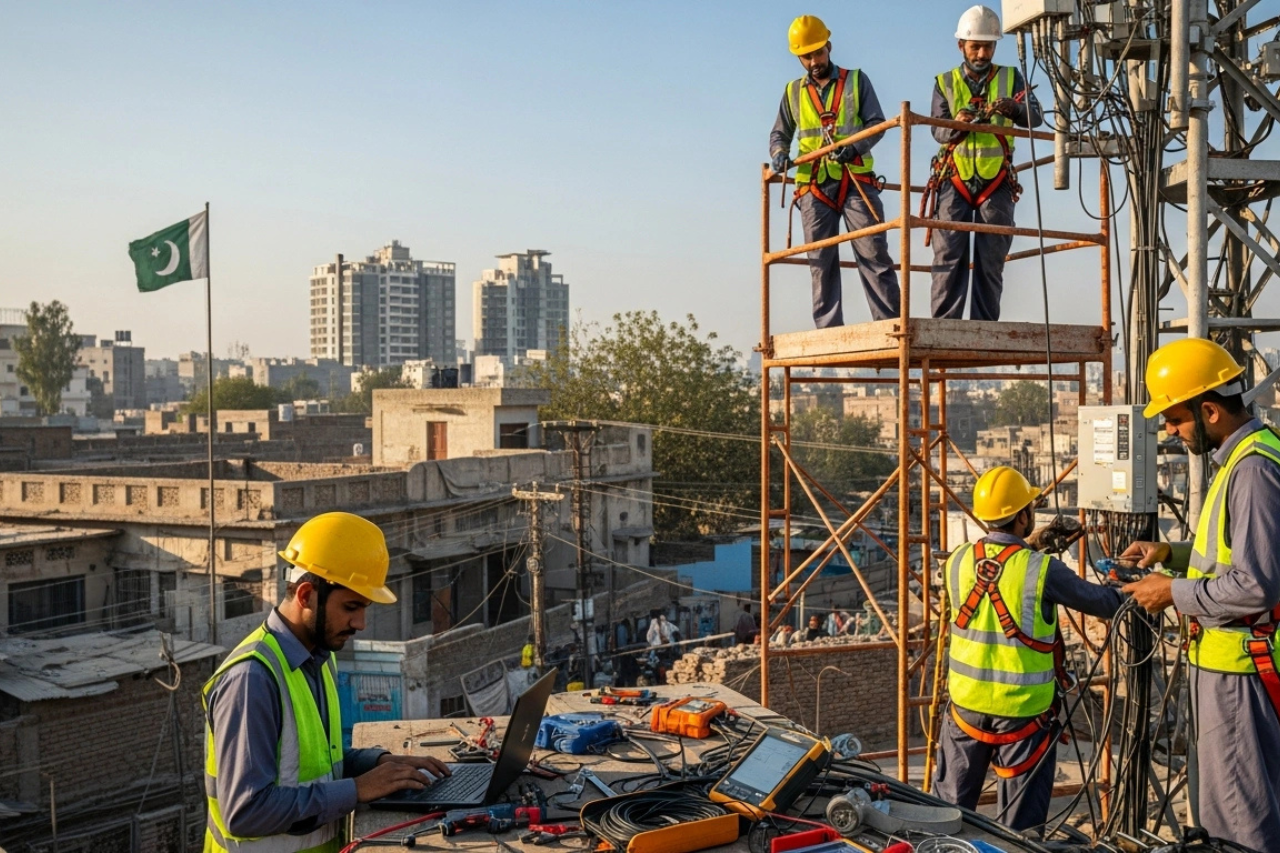
Telecommunication infrastructure involves building essential systems, such as telecom towers and cables, that allow fast and reliable communication. We focus on designing and creating efficient networks that work seamlessly in both urban and remote areas. Our services ensure smooth connectivity for homes, businesses, and communities.
We specialize in building telecom networks that meet modern data needs. Our projects are designed to last, providing reliable and stable communication systems for all kinds of users. Trust us to manage your telecommunication construction with the expertise and care it deserves.
With years of experience in solar, telecom, security, and construction, we deliver reliable solutions.
We are committed to delivering high-quality, reliable services on time, with customer satisfaction
Each project is unique, and we offer customized solutions tailored to your needs, ensuringlong-term performance.
Our sustainable solar solutions help reduce carbon footprints and promote clean energy.
Telecommunication infrastructure refers to the physical networks and systems used for transmitting data, including towers, cables, routers, and antennas.
It enables reliable communication, internet access, and data transmission, supporting everything from mobile phones to internet services.
Key components include communication towers, fiber optic cables, satellite systems, antennas, and network hubs.
It provides the backbone for fast, reliable communication, enhancing business operations, customer interactions, and data management.
The common types are guyed towers, self-supporting towers, and monopoles, each serving different structural needs.
Fiber optics offer high-speed data transfer over long distances with minimal signal loss, essential for fast and reliable internet access.
Upgrading infrastructure improves network capacity, supports new technologies, enhances service quality, and ensures future scalability.
Weather, climate, and geographical conditions can impact the durability and reliability of infrastructure like towers and cables.
Wireless communication enables mobile network services and Wi-Fi, facilitating connectivity without the need for physical cables.
Challenges include site acquisition, regulatory approvals, environmental concerns, and maintaining network performance during construction.
The construction timeline depends on the project size and complexity, typically ranging from a few months to over a year.
Projects must comply with local zoning laws, environmental regulations, and safety standards to ensure legal and safe operations.
5G requires advanced infrastructure, such as small cells, to support higher data speeds and more reliable connections across dense urban areas.
Costs vary widely based on factors like location, technology used, and project scale, ranging from thousands to millions of dollars for large-scale builds.